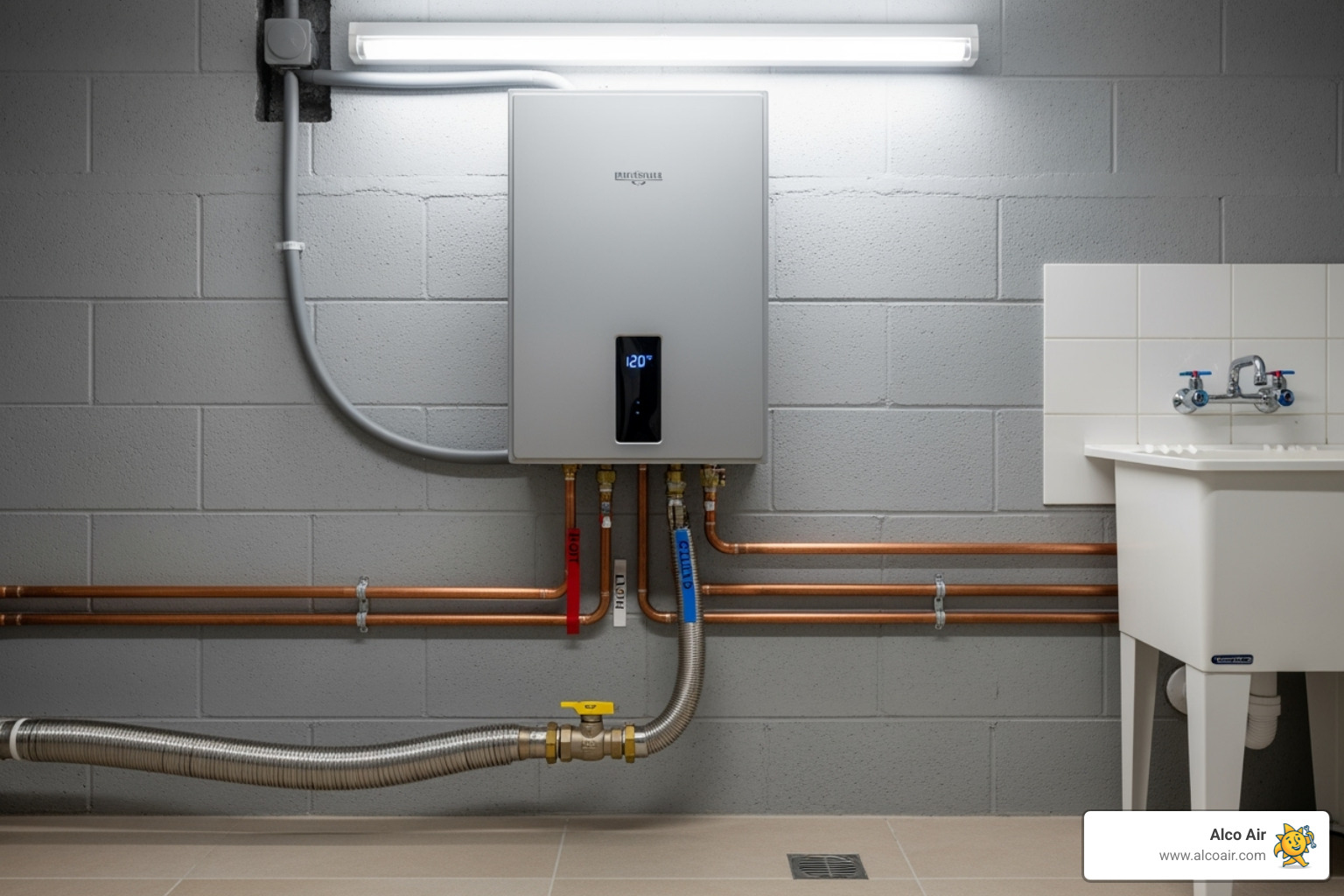
Tankless water heater installation involves removing the old water heater, checking the home’s plumbing, gas, electrical, and venting systems, mounting the new tankless unit, connecting the water lines, upgrading gas or electrical service as needed, and testing the system for safe operation. A tankless water heater may be right for your home if you want endless hot water, better energy efficiency, more usable space, and long-term performance with proper maintenance.
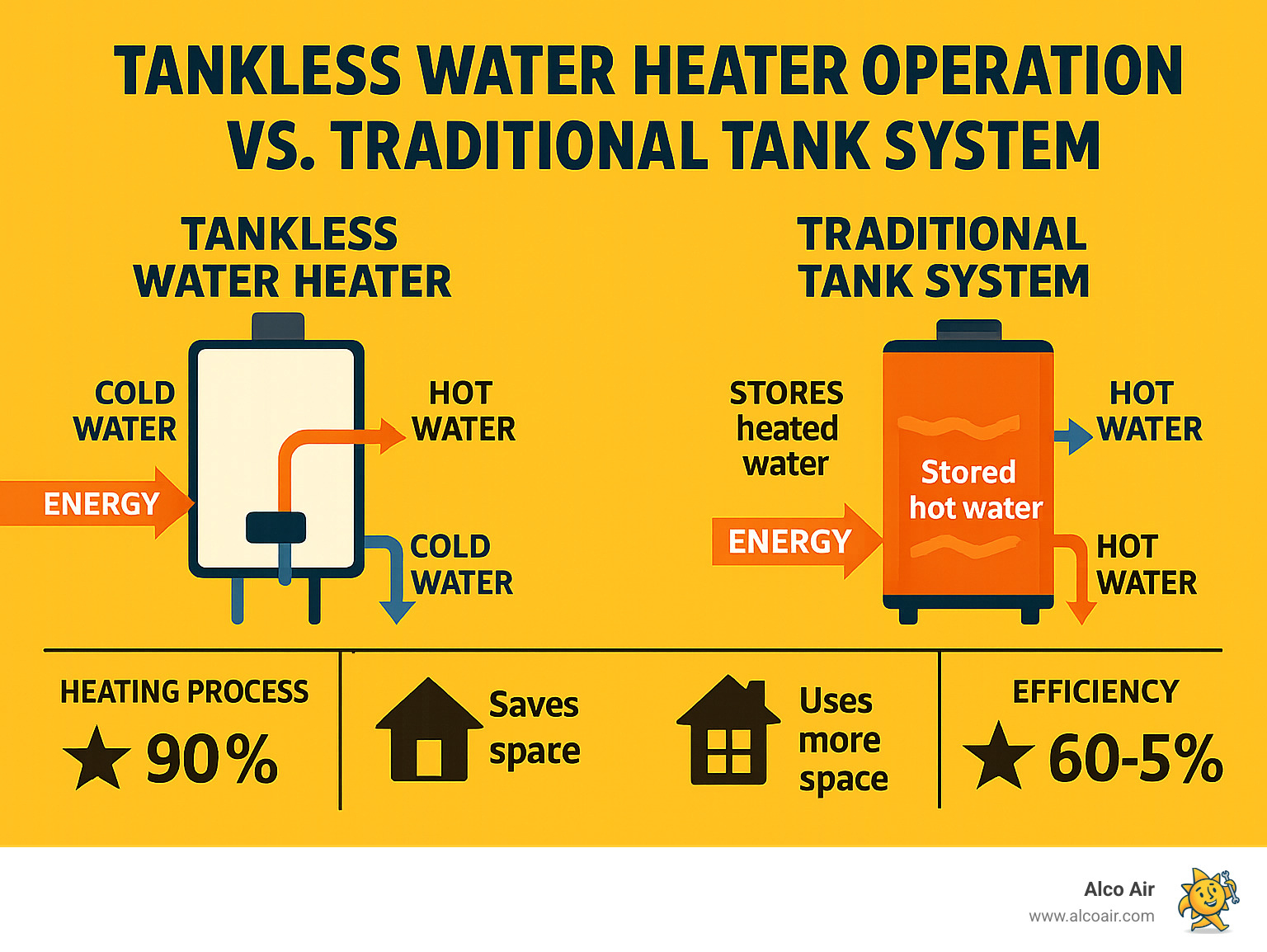
A tankless water heater can give your home hot water on demand without storing gallons of heated water in a tank. Instead of keeping water hot all day, the system heats water only when you turn on a faucet, shower, dishwasher, or appliance.
In this guide, we will explain how tankless water heater installation works, how to choose between gas and electric models, what size system you may need, what upgrades may be required, and why professional installation matters.
Should You Install a Tankless Water Heater in Your Home?
A tankless water heater can be a smart choice if your current water heater is old, inefficient, leaking, or unable to keep up with your household’s hot water needs. It can also be a good option if you want to save space or improve energy efficiency.
A tankless water heater may be right for your home if:
- You want hot water on demand.
- Your household often runs out of hot water.
- You want a more energy-efficient water heating option.
- You want to free up space in a utility room, closet, garage, or basement.
- Your current water heater is near the end of its lifespan.
- You plan to stay in your home long enough to benefit from long-term savings.
- You want a system that can last for many years with proper maintenance.
A professional plumber can inspect your home and help determine whether a tankless water heater installation is the right choice.
What Are the Benefits of a Tankless Water Heater?
Tankless water heaters offer several benefits compared to traditional storage tank systems. The biggest advantage is that they heat water on demand, which can reduce energy waste.
Key benefits of tankless water heaters include:
- Endless hot water: The system heats water on demand, so you are less likely to run out of hot water during showers, laundry, or dishwashing.
- Improved energy efficiency: Tankless units do not continuously heat a full tank of water.
- Space savings: Most tankless units are compact and wall-mounted.
- Longer system lifespan: With proper maintenance, many tankless systems can last longer than traditional tank units.
- Lower standby energy loss: Water is not stored and reheated throughout the day.
- Cleaner system design: No large storage tank is needed.
- Flexible placement options: Some units can be installed in smaller areas with proper clearance, ventilation, and code compliance.
- Consistent hot water: Properly sized units can support everyday household hot water demand.
Are There Any Drawbacks to Tankless Water Heaters?
Tankless water heaters can be highly effective, but they are not the perfect fit for every home. The main concerns are upfront cost, installation requirements, and proper sizing.
Potential drawbacks include:
- Higher upfront installation cost than some traditional tank systems
- Possible gas line upgrades for gas models
- Possible electrical panel or circuit upgrades for electric models
- Venting requirements for gas tankless water heaters
- Flow rate limits if the system is undersized
- Need for regular flushing and maintenance
- Installation complexity in older homes
- Possible delays in hot water delivery depending on fixture distance
These drawbacks can often be addressed with proper system selection, professional installation, and routine maintenance.
Should You Choose a Gas or Electric Tankless Water Heater?
The best choice depends on your home’s utilities, hot water demand, available space, and installation requirements. Gas and electric tankless water heaters both provide on-demand hot water, but they have different strengths.
A gas tankless water heater may be a good choice if:
- Your home already has natural gas or propane.
- You have a larger household.
- You need higher hot water flow rates.
- Multiple showers or appliances may run simultaneously.
- You have space for proper venting.
- Your gas line can support the unit, or you are prepared for an upgrade.
An electric tankless water heater may be a good choice if:
- Your home does not have gas service.
- Your household has lower hot water demand.
- You want to avoid combustion venting requirements.
- Your electrical panel can support the unit.
- You need a compact installation option.
- You want a simpler setup for a smaller home or specific point-of-use application.
Ask a professional if you are unsure whether your home has the gas capacity, electrical capacity, or venting setup needed for tankless installation.
What Size Tankless Water Heater Do You Need?
Tankless water heater sizing depends on how much hot water your household needs at one time. This is usually measured in gallons per minute (GPM).
To choose the right size, a professional will consider:
- Number of bathrooms
- Number of people in the home
- Shower and fixture flow rates
- Dishwasher and laundry use
- How many fixtures may run at once
- Incoming groundwater temperature
- Desired hot water temperature
- Gas or electrical capacity
- Whole-home or point-of-use installation
An undersized tankless water heater may not keep up with demand. An oversized unit may cost more than necessary. Proper sizing helps protect comfort, efficiency, and long-term performance.
What Do GPM and UEF Mean for Tankless Water Heaters?
Two important terms to understand when comparing tankless water heaters are GPM and UEF.
GPM means gallons per minute. This tells you how much hot water the system can deliver at one time. For example, running a shower and a dishwasher at the same time requires more GPM than running a single bathroom sink.
UEF means Uniform Energy Factor. This rating measures water heater efficiency. A higher UEF means the system uses energy more efficiently.
When comparing tankless models, look at:
- Maximum GPM
- UEF rating
- Fuel type
- Household hot water demand
- Installation requirements
- Manufacturer warranty
- Maintenance needs
- Long-term operating cost
A professional can help match the right unit to your household’s daily hot water use.
How Should You Prepare for Tankless Water Heater Installation?
Before installation, your plumber should evaluate your current water heater, plumbing connections, gas or electrical setup, venting options, and available installation space.
Preparation may include:
- Inspecting the old water heater
- Reviewing household hot water demand
- Checking the water line condition
- Confirming gas line capacity for gas models
- Checking the electrical panel capacity for electric models
- Evaluating venting options
- Measuring available wall space
- Reviewing local code requirements
- Confirming drainage options
- Choosing a properly sized tankless unit
This step helps prevent installation delays and ensures the system is safe, efficient, and code-compliant.
Do Tankless Water Heaters Need Gas Line or Electrical Upgrades?
Some tankless water heaters require gas line or electrical upgrades. This depends on the model, fuel type, and your home’s existing setup.
A gas tankless water heater may require:
- A larger gas line
- Updated gas connections
- Proper combustion air
- Dedicated venting
- Condensate drainage for condensing models
- Code-compliant clearances
An electric tankless water heater may require:
- Dedicated circuits
- Higher amperage capacity
- Electrical panel upgrades
- Updated wiring
- Proper breaker sizing
- Code-compliant installation
These upgrades are one reason professional installation is important. A licensed installer can determine what your home needs before the system is installed.
What Venting Requirements Apply to Tankless Water Heaters?
Gas tankless water heaters need proper venting to safely remove combustion gases from the home. Venting requirements vary based on the unit type, manufacturer instructions, location, and local code.
Gas tankless venting may involve:
- Direct venting through an exterior wall
- Vertical venting through the roof
- Approved vent materials
- Proper vent slope
- Correct intake and exhaust placement
- Required clearances from windows, doors, and openings
- Condensate drainage for high-efficiency models
Electric tankless water heaters do not require combustion venting, but they still require proper electrical installation and code compliance.
How Is a Tankless Water Heater Installed?
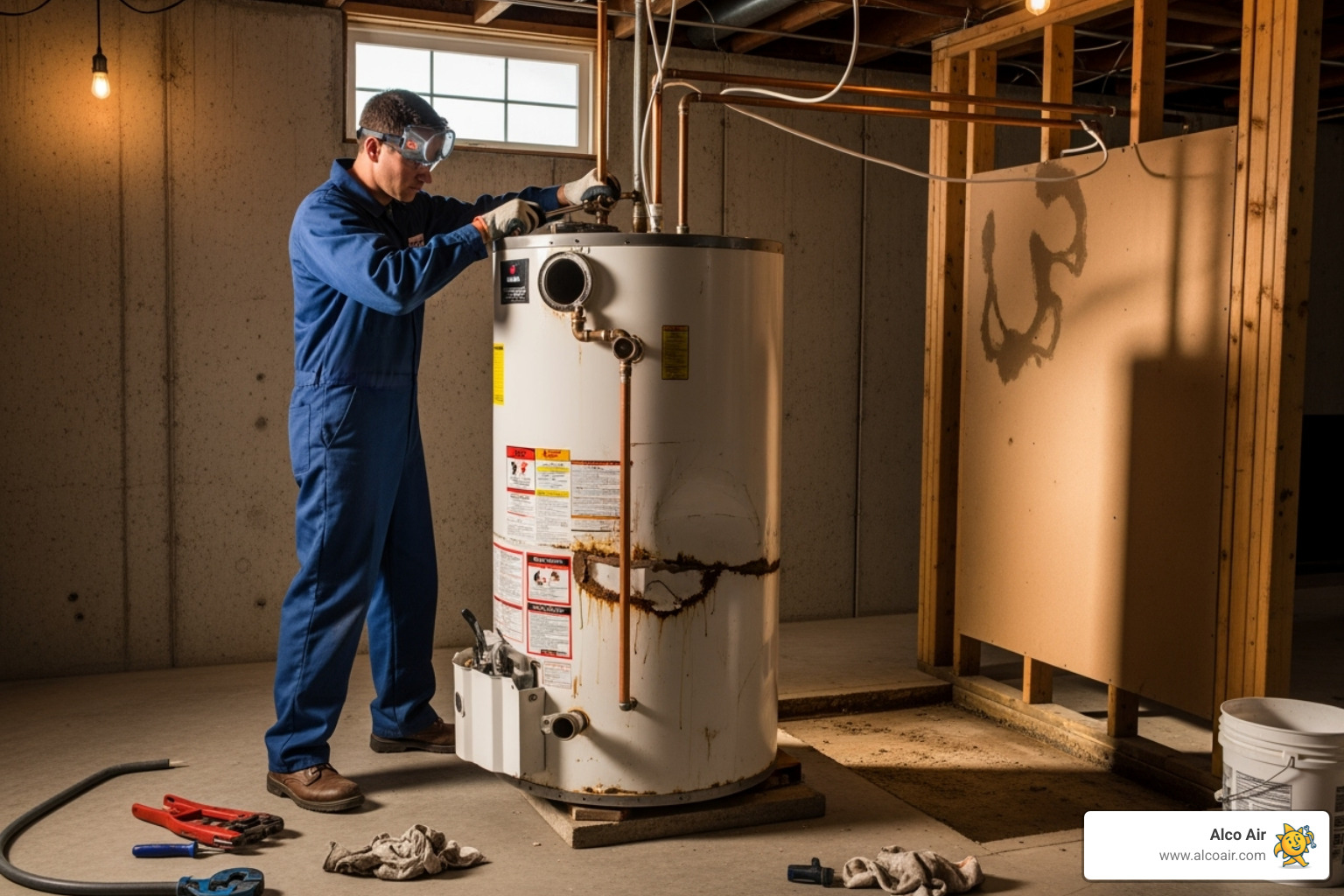
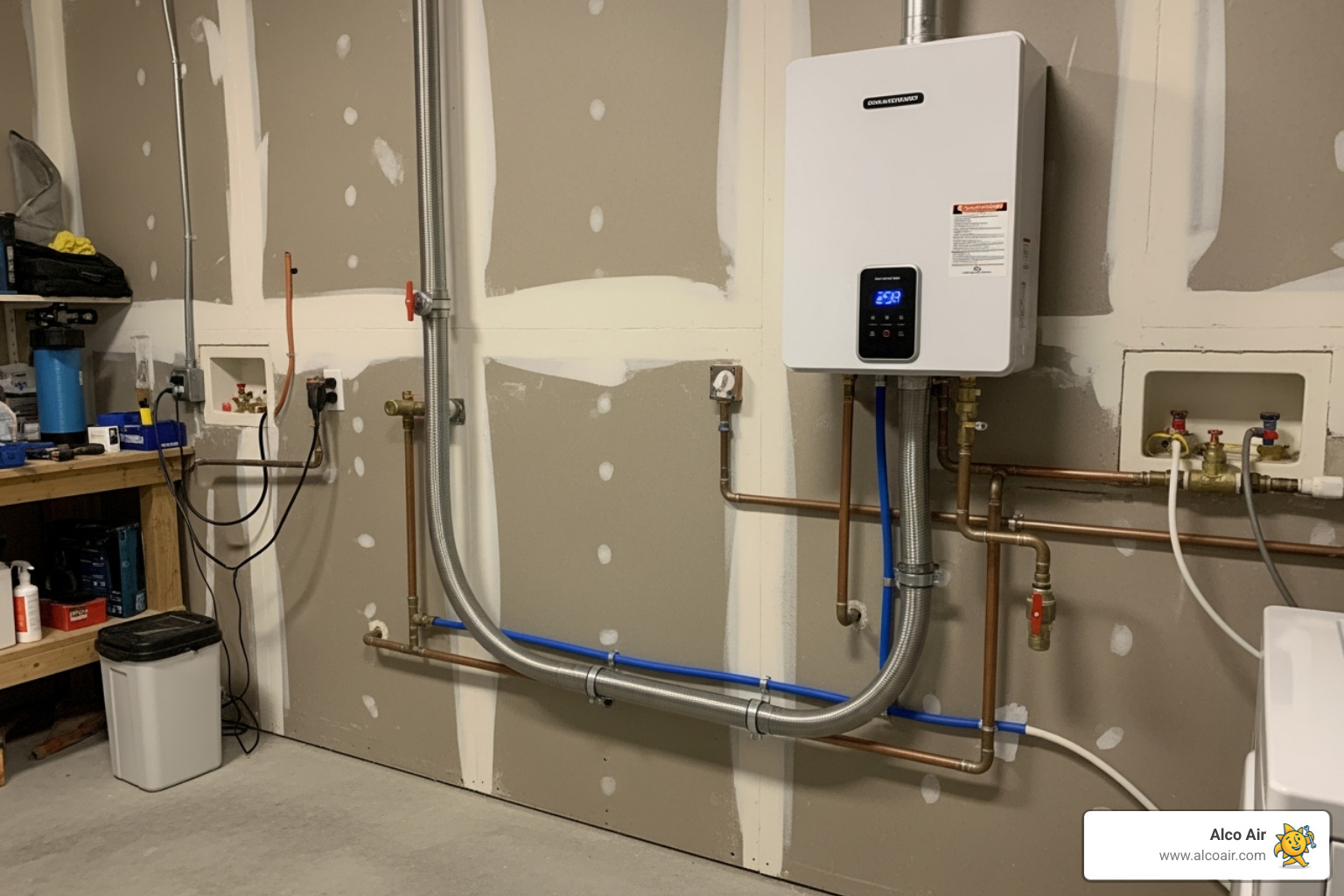
Tankless water heater installation should be completed by a qualified professional. The process depends on the model and home setup, but most installations follow a similar sequence.
Typical tankless water heater installation steps include:
- Turn off water, gas, and electrical connections as needed.
- Drain and disconnect the old water heater.
- Remove and properly dispose of the old unit.
- Inspect plumbing, gas, electrical, and venting connections.
- Complete required gas line or electrical upgrades.
- Mount the tankless unit securely on the wall.
- Connect the cold water inlet and hot water outlet.
- Install isolation valves for future maintenance and flushing.
- Connect the gas line or electrical supply.
- Install proper venting for gas tankless models.
- Check all water, gas, and electrical connections.
- Test the system for leaks and safe operation.
- Set the water temperature.
- Confirm proper hot water flow at fixtures.
- Review basic system operation with the homeowner.
Professional installation helps protect safety, warranty coverage, performance, and code compliance.
How Long Does Tankless Water Heater Installation Take?
Installation time depends on the home and the amount of work required. A straightforward replacement may be completed faster than a project that requires gas line upgrades, electrical changes, venting adjustments, or unit relocation.
Installation may take longer if:
- The home needs a larger gas line.
- The electrical panel needs upgrades.
- New venting must be installed.
- Plumbing connections need modification.
- The unit is being moved to a new location.
- Local code updates are required.
- The old water heater is difficult to access.
Your installer can explain the expected installation process after inspecting your home.
How Do You Maintain a Tankless Water Heater After Installation?
Tankless water heaters need routine maintenance to protect efficiency and lifespan. Mineral buildup can reduce performance, especially in areas with hard water.
Recommended maintenance may include:
- Flushing the system regularly
- Cleaning or checking inlet water filters
- Inspecting venting on gas models
- Checking for error codes
- Looking for leaks
- Testing water temperature
- Descaling the heat exchanger as needed
- Checking gas or electrical connections
- Scheduling professional maintenance
- Installing water treatment if hard water is a concern
Maintenance frequency depends on water quality, usage, and manufacturer recommendations.
How Long Does a Tankless Water Heater Last?
A tankless water heater can last many years with proper installation and maintenance. Many homeowners choose tankless systems because they often have a longer service life than traditional storage tank water heaters.
System lifespan depends on:
- Installation quality
- Water quality
- Usage level
- Maintenance frequency
- Fuel type
- Manufacturer quality
- Venting and drainage setup
- Whether the system is flushed regularly
Routine service can help reduce mineral buildup, protect system components, and extend the unit’s life.
Is Professional Tankless Water Heater Installation Worth It?
Yes, professional tankless water heater installation is worth it because the system must be properly sized, mounted, vented, connected, and tested. Mistakes with gas, electricity, water lines, or venting can create safety risks and performance problems.
Professional installation helps ensure:
- Correct system sizing
- Safe gas or electrical connections
- Code-compliant venting
- Proper water line connections
- Correct mounting and clearances
- Leak testing
- Reliable hot water performance
- Manufacturer warranty protection
- Long-term system efficiency
A professional can also explain how to operate and maintain the new system.
Who Installs Tankless Water Heaters in Longview?
If you are considering a tankless water heater in Longview or the surrounding area, Alco Air can help you choose the right system and install it properly. A professional installation starts with evaluating your home’s hot water needs, utilities, available space, and code requirements.
Alco Air can help with:
- Tankless water heater recommendations
- Gas and electric model comparisons
- Water heater sizing
- Old water heater removal
- Professional installation
- Venting and code compliance
- System testing
- Maintenance guidance
- Ongoing water heater service
Schedule Tankless Water Heater Installation With Alco Air
A tankless water heater can give your home efficient, on-demand hot water while saving space and improving long-term comfort. Whether you are replacing an old tank unit or upgrading to a more efficient system, professional installation is key to safe, reliable performance.
Contact Alco Air today to schedule tankless water heater installation in Longview and the surrounding areas. Our team can inspect your home, explain your options, install the right system, and help you enjoy dependable hot water when you need it.